By Randy Waller
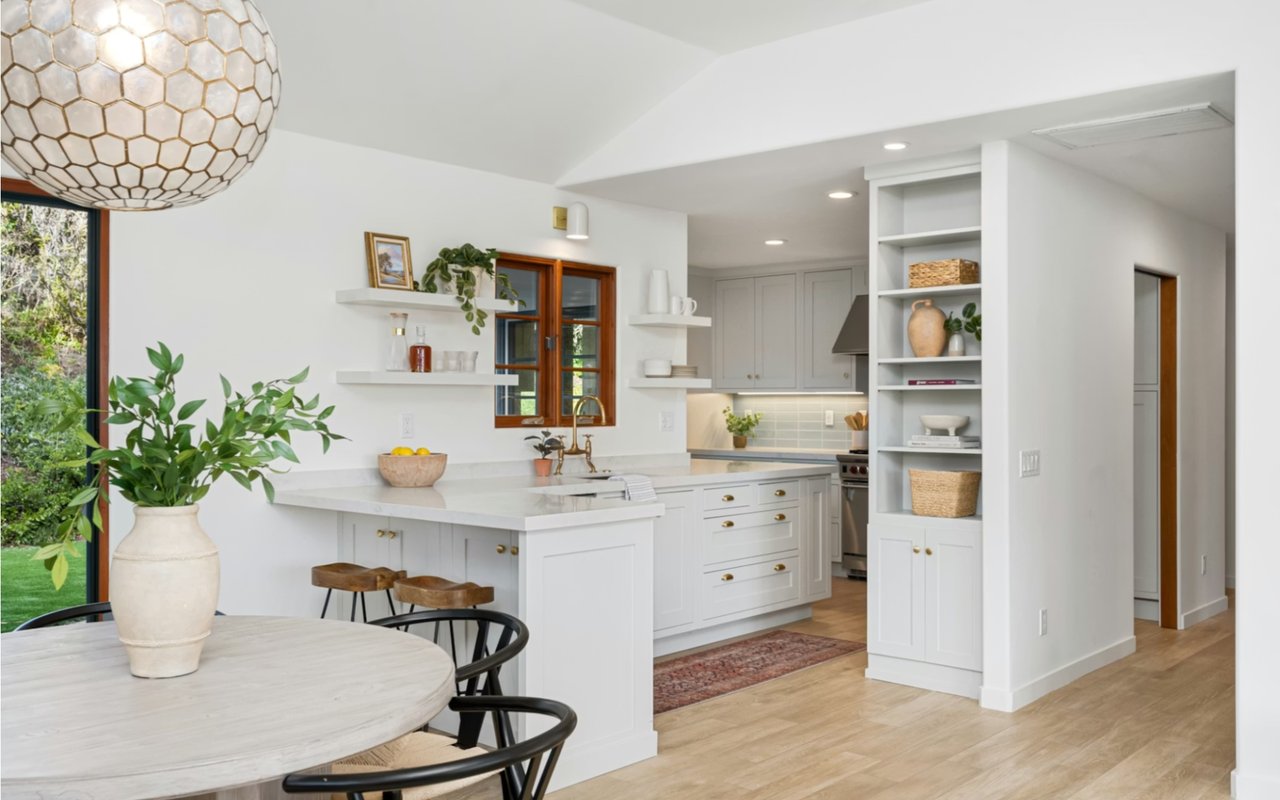
Santa Rosa's housing market spans a wide range of home sizes and configurations — from compact mid-century ranches in established neighborhoods to newer construction with more generous square footage in communities like Fountaingrove and Bennett Valley. Regardless of where you land on that spectrum, interior design for small spaces is one of the most practical skills a homeowner can develop. Done well, it increases daily livability, improves how a home photographs, and adds real value when it's time to sell. Here's what actually works.
Key Takeaways
- Space is as much a perception as a measurement. The right design choices make rooms read significantly larger without changing their dimensions.
- Light — both natural and artificial — is the most powerful space-expanding tool available to any homeowner.
- Furniture scale, placement, and function determine whether a room feels open or crowded more than square footage alone.
- These principles apply whether you're living in the home long-term or preparing it for the market.
Start with Light
Natural light is the fastest, least expensive way to make a space feel larger. It's also one of the most decisive factors buyers evaluate during showings and in listing photography. In Santa Rosa's climate, where clear, bright days are plentiful for much of the year, maximizing light is both practical and valuable.
How to Maximize Light in Any Room
- Remove or replace heavy window treatments with lighter options — sheer panels, roman shades, or nothing at all on windows that don't face a privacy concern.
- Position mirrors on walls opposite or adjacent to windows to reflect light deeper into the room and create the perception of additional depth.
- Use a consistent, light neutral on walls and ceilings. Paint color changes how light behaves in a room — lighter tones reflect it, while dark tones absorb it and make spaces contract visually.
- Ensure artificial lighting covers three layers: ambient overhead light, task lighting for functional areas, and accent lighting that draws the eye upward and around the room.
Light does more work per dollar than almost any other design investment.
Choose Furniture That Fits the Scale of the Room
Oversized furniture is the most common reason small rooms feel crowded. A sofa that's two feet too long, a dining table that seats eight in a room that comfortably fits six — these choices make rooms feel smaller than they are and create the visual noise that buyers notice immediately.
How to Scale Furniture Correctly
- Measure the room before purchasing or arranging furniture. A sofa should leave at least 18 inches of walking clearance on either side and should not block sightlines to windows or architectural features.
- Choose furniture with legs over pieces that sit directly on the floor. Exposed legs create visual air underneath that makes rooms feel more open and less heavy.
- Use a single large rug rather than multiple small ones. A correctly scaled rug anchors the seating area and makes the floor plan feel intentional.
- Opt for multi-function pieces where space is limited. A storage ottoman, a desk that doubles as a console table, or a dining bench that tucks under a table all reduce visual and physical clutter without reducing utility.
Right-sizing furniture is the single change that transforms more rooms than any other design decision.
Use Vertical Space
Most small-space design thinking is horizontal — moving furniture around the floor plan. Vertical space is consistently underused and represents some of the highest-return design opportunities available, particularly in Santa Rosa's older homes where ceiling heights are often modest.
How to Use Vertical Space Effectively
- Install shelving or cabinetry that extends to the ceiling. Storage that stops at eye level wastes the upper third of the room and draws the ceiling down visually.
- Hang curtains and window treatments as high as possible — mounted near the ceiling rather than at the window frame, they make ceilings feel taller, and windows feel larger.
- Use tall, narrow furniture — a bookcase, a floor lamp, a vertical art arrangement — to draw the eye upward and create a sense of height in rooms where ceiling elevation is fixed.
- Keep the lower half of the walls relatively clear. Visual weight concentrated near the floor makes rooms feel lower and more compressed, while cleaner lower walls create breathing room.
Training your eye to look up in a room changes how you use and experience the space.
Edit Relentlessly
The most transformative space-maximizing technique costs nothing. Removing items that don't earn their place in a room creates more perceived space than almost any purchase or renovation could. This is especially relevant for sellers preparing a home for the market, but it applies equally to any homeowner who wants their rooms to feel better to live in.
What Editing Actually Looks Like
- Apply a one-in-one-out rule to surfaces. Every item on a countertop, shelf, or tabletop should be there deliberately. If it isn't adding function or genuine visual value, it's adding clutter.
- Clear the floor. Objects on the floor — dog beds, exercise equipment, stacked items waiting to be dealt with — make rooms feel smaller more immediately than almost anything else.
- Reduce art and objects on walls to what genuinely belongs there. A few well-chosen pieces have more visual impact than a crowded arrangement, and blank wall space reads as intentional rather than empty.
- Evaluate closets and storage areas with the same eye. Buyers open everything, and overflowing storage signals to them that the home can't accommodate a normal household's belongings.
Editing is a discipline, not a one-time task — and it pays off both in livability and in resale.
FAQs
What paint color makes a small room feel the largest?
Light neutrals with warm undertones — soft whites, warm greiges, and pale creams — consistently perform best. Extending the same color from the walls to the ceiling eliminates the visual boundary between them, which makes the room feel taller. Cool stark whites can feel clinical in smaller spaces and don't photograph as warmly.
Should I remove furniture before listing my Santa Rosa home?
Often, yes. Most occupied homes benefit from editing out at least one or two pieces per room before professional photography and showings. The goal is for each room to look furnished and livable while reading as spacious — a balance that usually requires less than most sellers start with.
Does interior design affect how quickly a Santa Rosa home sells?
Directly. Well-presented homes generate more online interest, more showings, and stronger offers. In a market where buyers often compare several properties at similar price points, how a home feels during a showing is frequently what pushes one offer over another.
Sell or Buy in Santa Rosa with the Right Partner
Understanding what makes a home work — in design, in function, and in the market — is something I've spent a lifetime learning. As the #1 real estate agent in Sonoma and Napa Counties and Broker/Owner of W Real Estate, I lead the largest locally founded and independently owned brokerage in the North Bay, with 11 offices and 250-plus agents serving the region from San Francisco to Mendocino County.
Whether you're preparing to list or looking for your next home, I bring market knowledge and expertise that can't be replicated. To learn more about my services, connect with me today.
Whether you're preparing to list or looking for your next home, I bring market knowledge and expertise that can't be replicated. To learn more about my services, connect with me today.